

FEBRUARY 2026


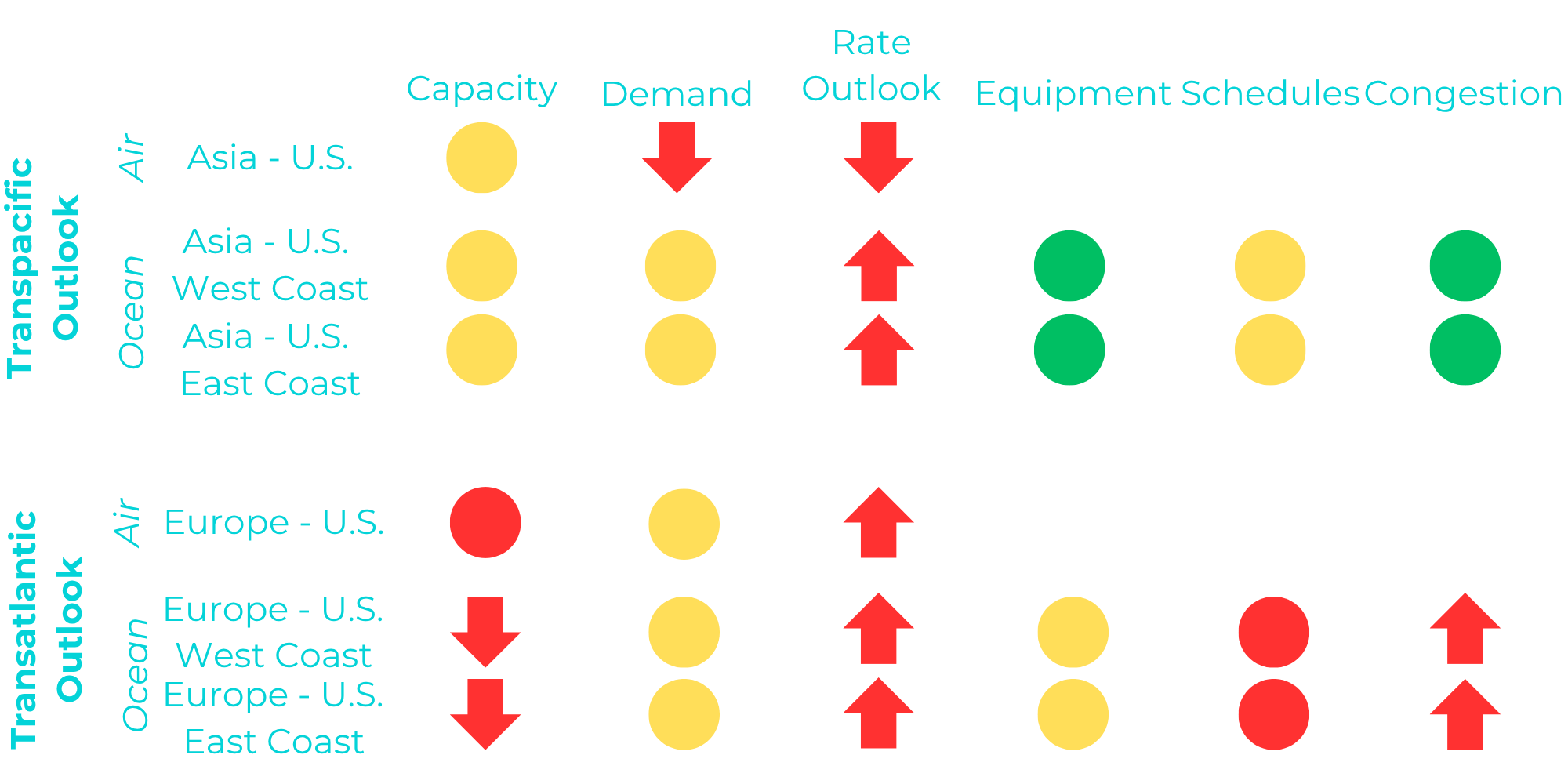
In Asia, Lunar New Year factory shutdowns and paused ocean bookings out of China have tightened capacity, driving up air and inland freight rates. In the coming weeks, as factories gradually resume operations and backlogged export orders move through the system, blank sailings are expected to keep capacity constrained, with the potential for a successful GRI effective March 1. Meanwhile, severe winter weather in both the U.S. and Europe, along with labor strikes at Lufthansa, have significantly disrupted air and ocean networks, increasing delays and costs across key hubs. Domestically, the FMCSA’s newly released interim final rule on non-domiciled CDLs has sparked debate within the trucking industry, with potential long-term implications for capacity and pricing.

Last month’s compliance landscape was marked by continued tariff uncertainty, legal challenges, and rapid policy shifts. Express Fasteners filed suit with the Court of International Trade over Section 232 valuation methodology, as importers face CF28/29s disputing derivative calculations and applying tariffs as high as 50% to entire articles. In a major development, the U.S. Supreme Court ruled that certain IEEPA tariffs exceeded executive authority, only for a new 10% global tariff under Section 122 to be implemented shortly after, replacing the invalidated measures for 150 days. While this shift reduces rates for some countries and provides limited in-transit relief, questions remain regarding the impact on the framework of multiple trade agreements and potential congressional action, keeping the trade community closely attuned to ongoing updates.
Stay connected with the latest from OCEANAIR. Sign up for our newsletter to receive The OCEANAIR Current, The Monthly Horizon, and OCEANAIR Tariff Talk — delivered straight to your inbox.