

JUNE 2026


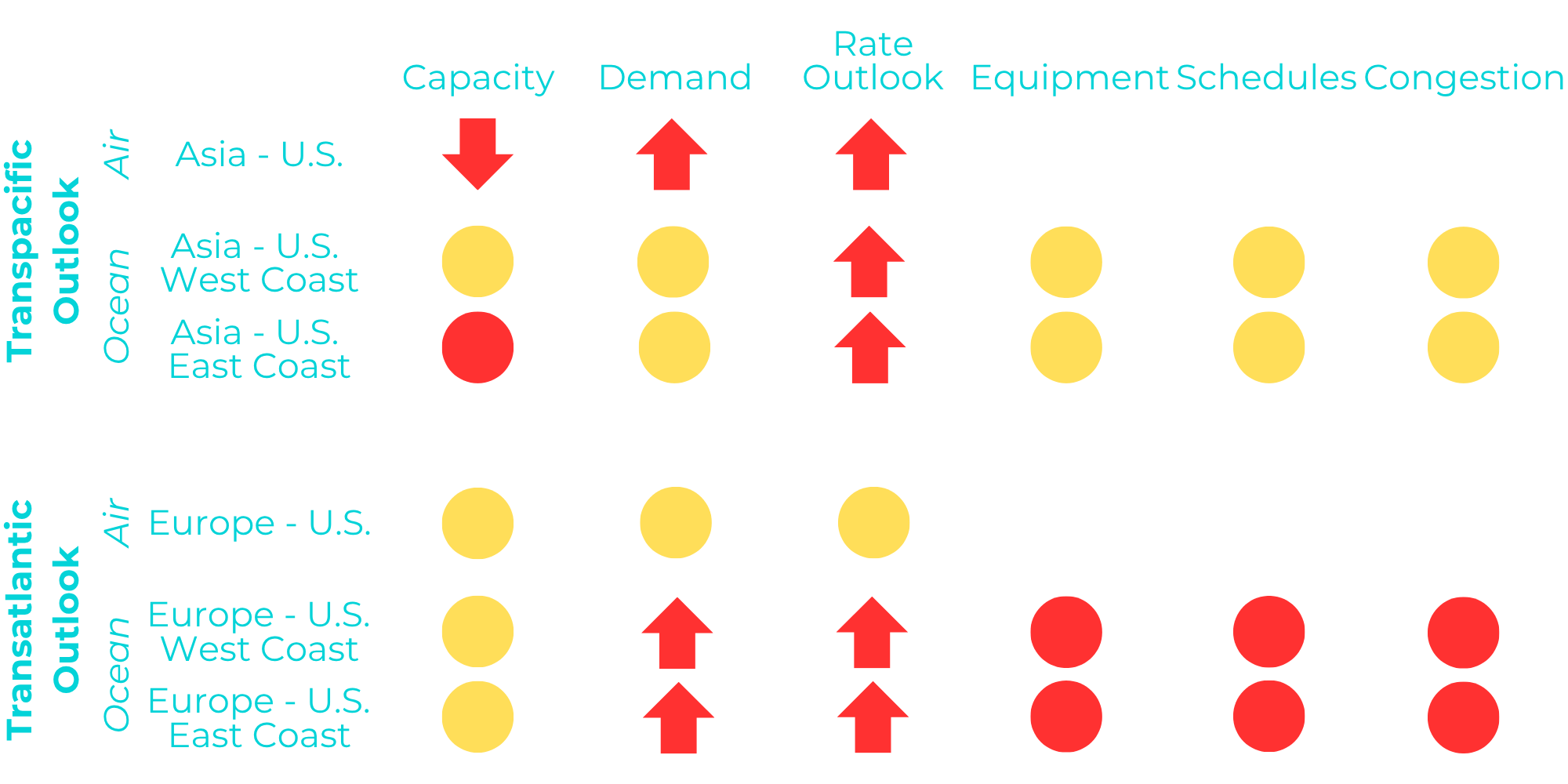
Escalating tensions in the Middle East created ongoing disruptions to air and ocean transportation, with intermittent airspace closures, flight cancellations, and security concerns affecting regional travel. The temporary closure of the Strait of Hormuz underscored the vulnerability of one of the world’s most critical shipping corridors, driving higher fuel costs, increasing insurance premiums, and rerouting vessels. At the same time, U.S. importers accelerated shipments from Asia ahead of anticipated tariff changes and rising transportation costs, creating exceptionally strong demand on trans-Pacific trade lanes, tightening capacity, and pushing ocean freight rates to their highest levels in a year. While signs of strengthening U.S. industrial activity emerged through heavier LTL shipments, the month also highlighted continued pressure on global infrastructure, with the Panama Canal announcing draft restrictions to conserve water resources. Encouragingly, late-month diplomatic progress between the U.S. and Iran has led to cautious optimism as vessel traffic through the Strait of Hormuz begins to normalize, offering hope for improved stability in the weeks ahead despite continued market volatility.

Importers continued to see progress on IEEPA tariff refund claims as CBP expanded processing capabilities through the CAPE application, though final details regarding appeals and the eligibility of finally liquidated entries remain unresolved. At the same time, Section 232 tariffs underwent major revisions, affecting industries ranging from industrial machinery and agriculture to steel- and aluminum-intensive products, while new Section 301 investigations proposed additional tariffs targeting imports from countries that fail to adequately address forced labor concerns. Looking ahead, an executive order calling for sweeping customs modernization signals increased scrutiny of importers through enhanced reporting requirements, stricter enforcement of classification, valuation, and country-of-origin rules, expanded importer transparency, and higher penalties for noncompliance. With implementation timelines already underway, importers should prepare for more robust data requirements, increased CBP oversight, and continued changes to the evolving U.S. trade landscape.
Stay connected with the latest from OCEANAIR. Sign up for our newsletter to receive The OCEANAIR Current, The Monthly Horizon, and OCEANAIR Tariff Talk — delivered straight to your inbox.