

MAY 2026


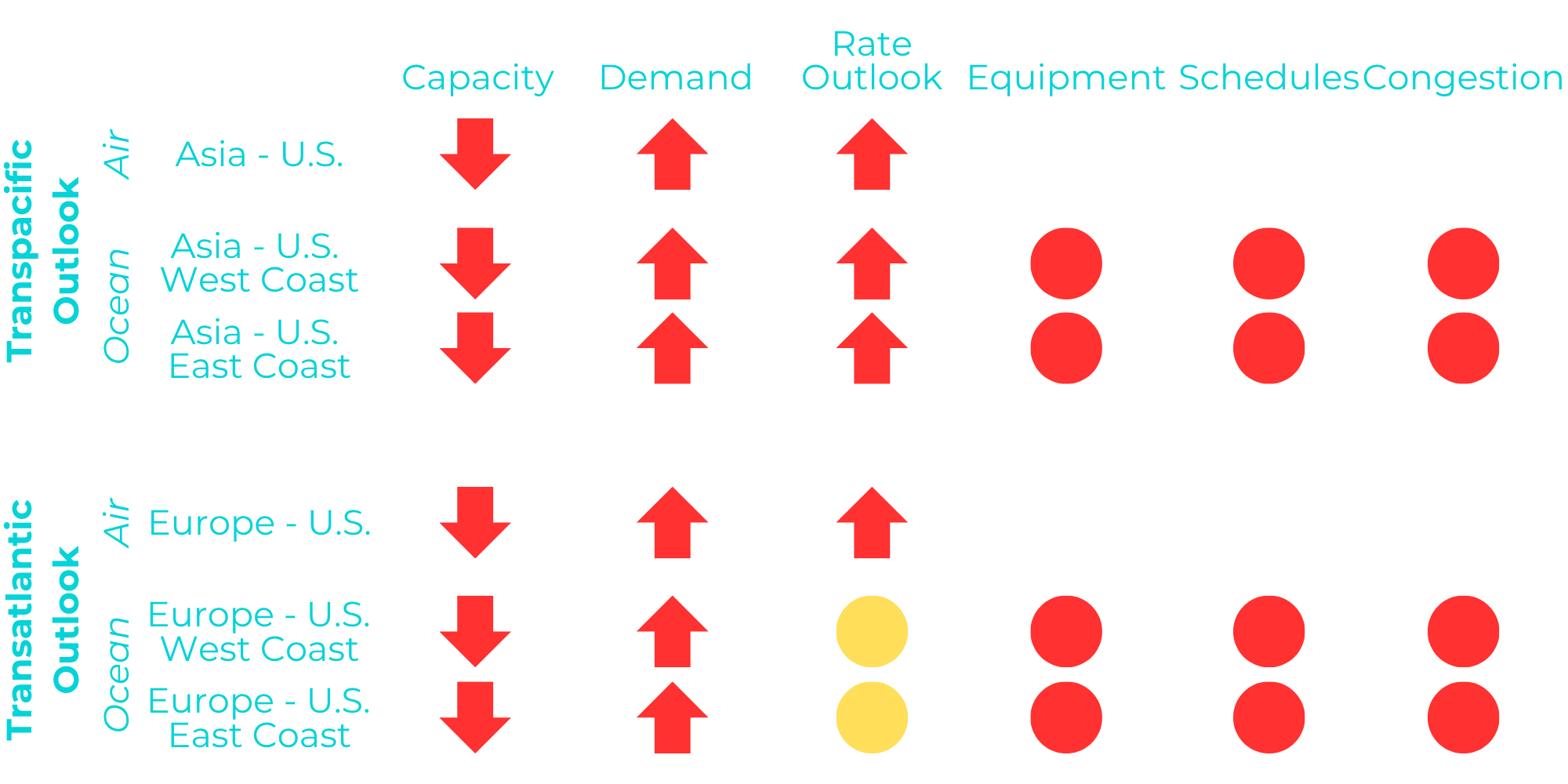
Ongoing instability near the Strait of Hormuz continued to disrupt critical maritime trade routes, contributing to fuel shortages, higher insurance costs, and declining schedule reliability across global shipping lanes. As carriers adjusted routes and relied on alternative bunkering hubs, congestion and tightening vessel capacity drove container spot rates higher ahead of an unusually early peak season. Agricultural exporters and other shippers also continued to absorb rising transportation costs tied to fuel surcharges and inland diesel increases, while expanded U.S. sanctions related to Iranian and Cuban trade activity introduced additional financial and compliance risks across global supply chains. Meanwhile, air cargo markets showed cautious signs of stabilization despite elevated jet fuel costs and ongoing geopolitical uncertainty. At the same time, the domestic freight market showed renewed signs of tightening as trucking companies faced increased enforcement activity, and volatile diesel prices. Recent Roadcheck Week inspections further strained an already constrained market, pushing spot rates upward as shippers worked to secure reliable capacity amid heightened scrutiny following the Supreme Court’s unanimous ruling expanding liability exposure for freight brokers and shippers.

This month’s compliance landscape remained focused on heightened CBP scrutiny and the growing importance of accuracy within the ACE Portal and CAPE refund submission process. CBP emphasized that even minor discrepancies between refund claims and original entry filings could lead to rejections, processing delays, or manual reviews, placing greater responsibility on importers to ensure all submissions are accurate and fully supported by documentation. Additionally, with paper refund checks officially discontinued as of February, importers are being encouraged to confirm ACH enrollment through an active ACE Portal account. Regulatory attention also increased around recordkeeping requirements tied to the 20% U.S. content rule and proof of tariff cost absorption as compliance expectations across the industry continue to rise.
Stay connected with the latest from OCEANAIR. Sign up for our newsletter to receive The OCEANAIR Current, The Monthly Horizon, and OCEANAIR Tariff Talk — delivered straight to your inbox.