

OCTOBER 2026


With Halloween just around the corner, it’s time to break out the costumes, stock up on candy, and prepare for a few tricks and treats! But for the logistics industry, the holiday season couldn’t come soon enough after a month filled with a few scares of its own.
Despite ongoing economic uncertainty, consumers aren’t letting higher prices scare them away from celebrating. According to the National Retail Federation (NRF), Halloween spending is expected to reach $13.5 billion this year, up from $13.1 billion in 2025. Looking ahead, holiday retail sales are projected to increase 4.2% to $1.013 trillion in November and December, signaling continued consumer demand as the industry prepares for the year-end shipping season.
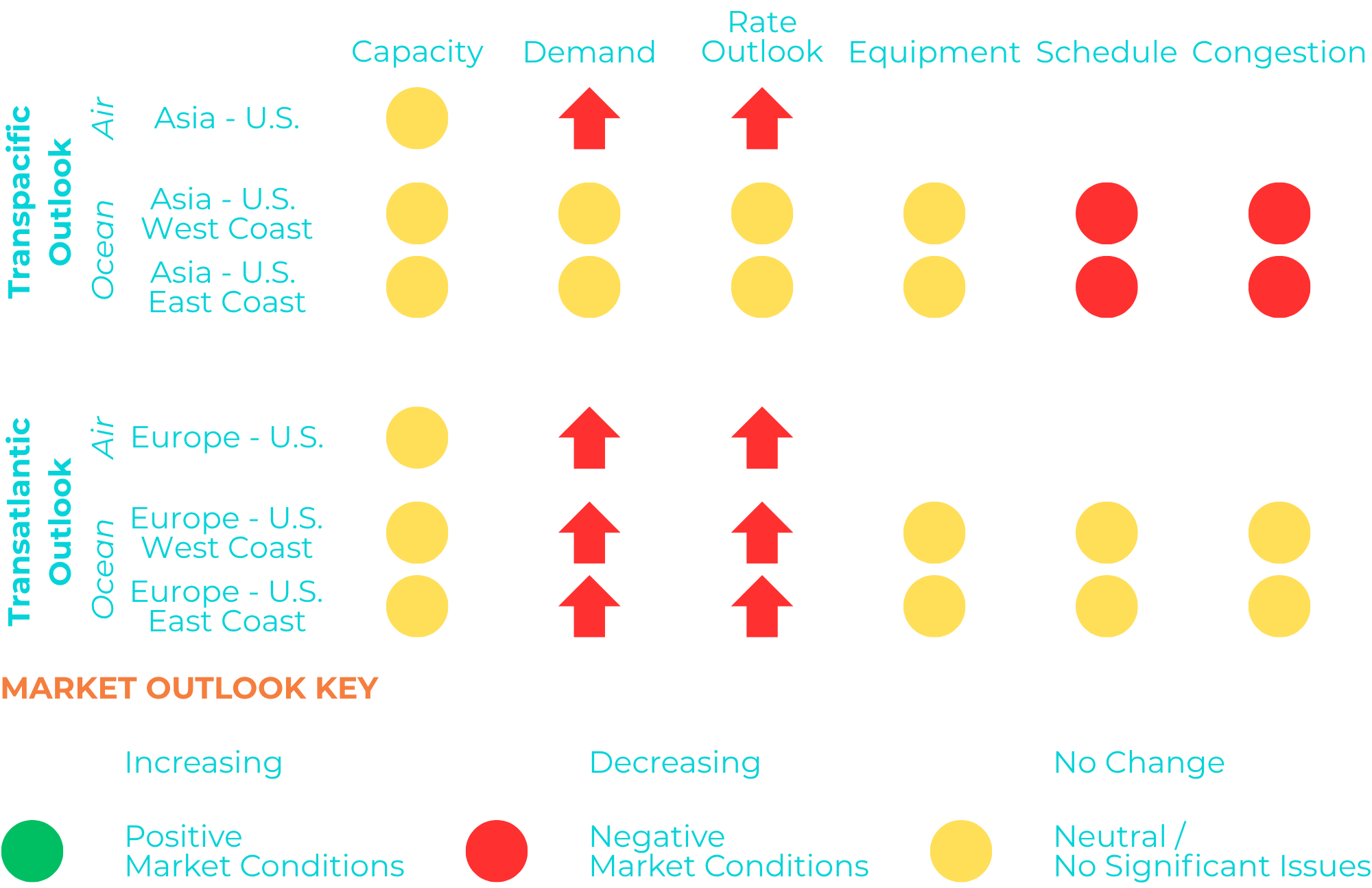
On the West Coast, congestion remains a growing concern. As of October 26, approximately 35,700 import containers were awaiting on-dock rail service at the Ports of Los Angeles and Long Beach, with more than 10,500 containers sitting for nine days or longer. Adding to the uncertainty, approximately 250 International Longshore and Warehouse Union (ILWU) Local 26 watchmen have authorized a potential strike beginning November 1. Although negotiations remain ongoing and no strike is currently underway, a walkout could disrupt vessel, yard, and truck-gate operations if other dockworkers honor the picket lines.
On a more positive note, improved rainfall allowed the Panama Canal to ease certain transit restrictions in October, increasing daily vessel capacity and helping improve transit times through the canal.

October brought several important updates from U.S. Customs and Border Protection (CBP), particularly surrounding tariff refunds and electronic filing procedures. CBP opened Phase 3 of its Consolidated Administration and Processing of Entries (CAPE) system on October 6, expanding IEEPA tariff refund processing for eligible Court of International Trade plaintiffs. Additional entry categories remain pending further guidance.
CBP also updated its Automated Commercial Environment (ACE) Portal, renaming the “ACH Refund Authorization” tab to “Financial Transactions,” where importers enter their ACH banking information to receive refunds. While the tab retains its existing functionality, the “Get Info/Refresh” button has been removed, as information now updates automatically when the tab is accessed. CBP plans to introduce additional enhancements for trade users and importers in the future. Separately, CBP extended the mandatory implementation deadline for its new Entry Type 13 international mail procedures to January 20, 2027, giving affected operators additional time to prepare.
Meanwhile, U.S.–Canada trade tensions continued to escalate. A lawsuit filed on October 20 challenged the administration’s use of Section 338 of the Tariff Act of 1930 to impose 50% tariffs on certain Canadian imports. Just days later, on October 23, the administration announced further modifications to the tariffs, removing certain products, including plywood, paper products, and machinery, while adding others, including valves, carpets, and waste products. The changes are scheduled to take effect October 30. Earlier in the month, the U.S. Department of Commerce also issued guidance clarifying how eligible U.S. content is calculated for certain Canadian and Mexican goods under the United States-Mexico-Canada Agreement (USMCA).
Stay connected with the latest from OCEANAIR. Sign up for our newsletter to receive The Weekly Current, The Monthly Horizon, and OCEANAIR Tariff Talk — delivered straight to your inbox.