

APRIL 2025


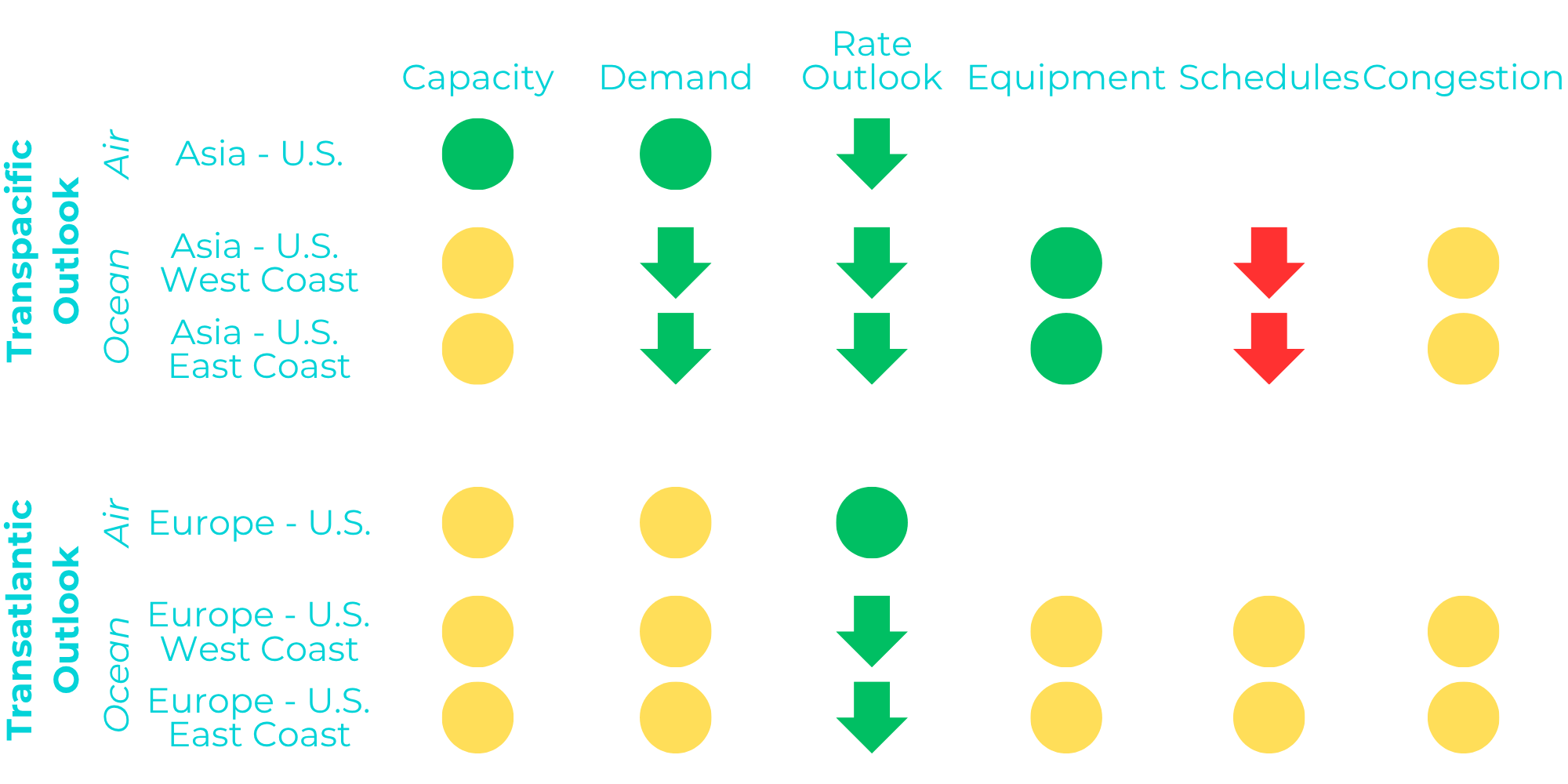
The expansion of the Harbor Maintenance Fee under CBP’s Maritime Action Plan is adding new layers of complexity for cross-border shipments, particularly for truck and rail imports from Canada and Mexico that originated via ocean freight. At the same time, sweeping global tariffs—most notably those targeting Chinese goods—have triggered a sharp decline in ocean freight bookings from Asia, leading to widespread delays, a rise in blank sailings, and downgraded forecasts from U.S. retailers. As the Trump administration reconsiders proposed fees on Chinese-linked vessels amid industry pushback, the uncertainty surrounding trade policy continues to disrupt sourcing and logistics strategies. In response, carriers are shifting capacity toward high-demand lanes, putting additional strain on equipment availability in regions like Southeast Asia and the Mediterranean. Meanwhile, mounting delays at the U.S.-Mexico border are further compounding challenges, driving up transportation costs and causing disruptions even for goods not directly impacted by tariffs.

With 125% IEEPA reciprocal tariffs on China and 10% on nearly all other trading partners, importers are strategizing how best to navigate the 90-day pause amid ongoing uncertainty. Negotiations and updates are expected throughout this period, though only a limited number of electronic product exclusions have made it through so far.
April, traditionally known for Liberation Day, may instead be remembered as the month of Reciprocal Tariff Chaos. On April 5, sweeping country-by-country tariff rates were imposed, shaking global markets and trade groups. While most nations saw a 10% rate, China faced a 34% tariff that quickly escalated to 125%, prompting a reciprocal response on many U.S. goods just days later.
As we head into May, there is cautious hope for tariff relief—but also the immediate challenge of managing shipments in the interim. Many importers are opting to delay cargo or explore bonded warehouse options. Everyone is seeking compliant, cost-saving strategies, but should proceed with caution: “too good to be true” offers—like questionable DDP arrangements or invoice manipulation—can lead to serious compliance risks.
Stay informed and stay diligent. Follow OCEANAIR on LinkedIn and subscribe to our client alerts for timely updates.
Stay connected with the latest from OCEANAIR. Sign up for our newsletter to receive The OCEANAIR Current, The Monthly Horizon, and OCEANAIR Tariff Talk — delivered straight to your inbox.