

MAY 2025

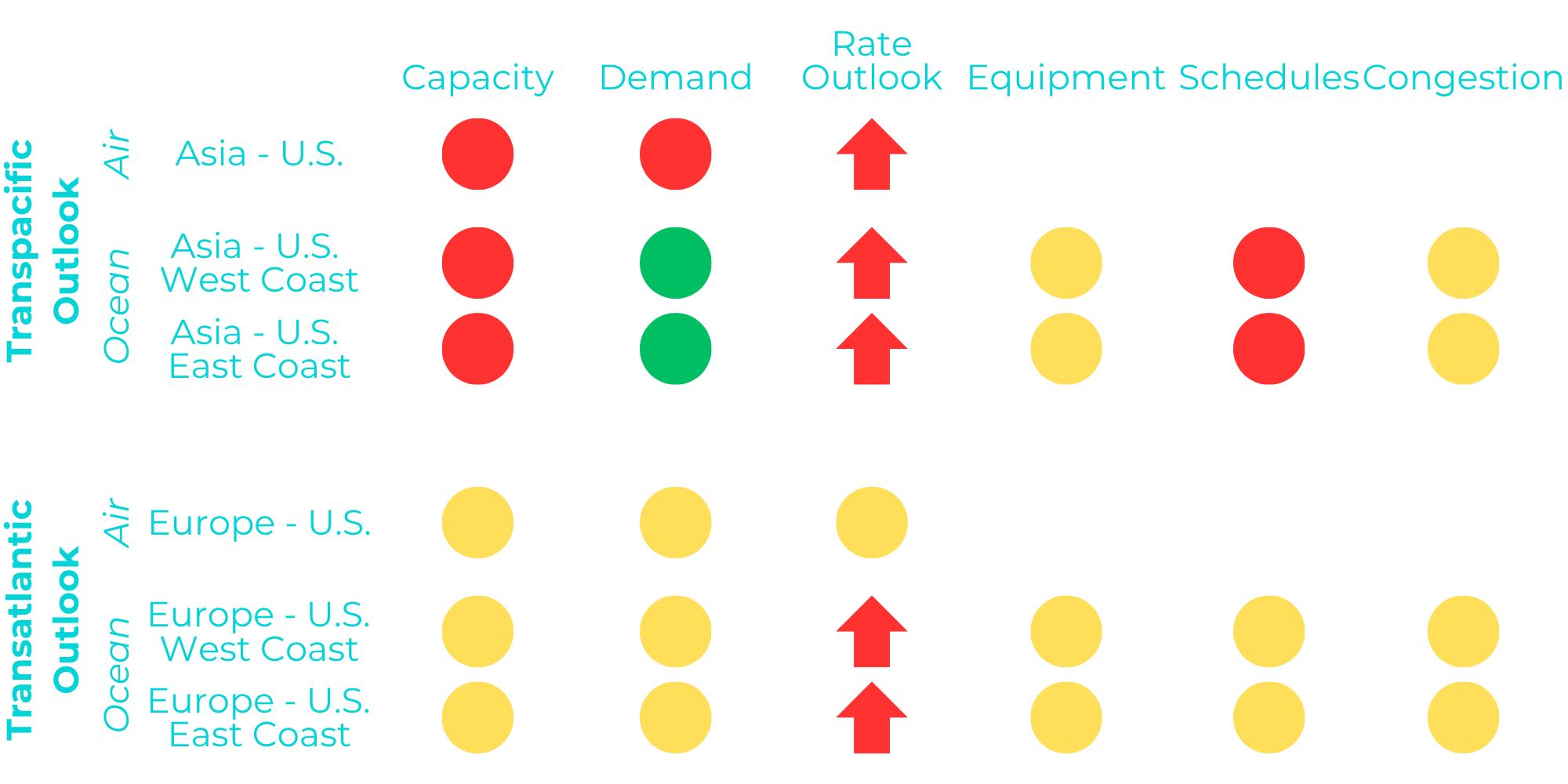
Over the past month, a 90-day tariff reduction on Chinese goods triggered a surge in U.S.-bound shipments, straining Transpacific ocean and air freight capacity, spiking rates, and increasing blank sailings. The U.S. Trade Representative also revised Section 301 measures targeting China’s shipbuilding sector, softening its approach with key exemptions and reducing the number of impacted vessels. Congestion is worsening at U.S. ports due to redirected cargo and is expected to intensify. Meanwhile, the DOT will begin enforcing English-language proficiency rules for commercial drivers on June 25, likely tightening truck capacity. In Europe, major ports are facing prolonged delays due to strikes and vessel reassignments. South Asia is also seeing severe disruptions after India and Pakistan imposed mutual trade restrictions, leading to port congestion and expected emergency surcharges. Looking ahead, importers should pre-book cargo early and prepare for continued delays and capacity shortages across global trade lanes.

Summary
While April was marked by the introduction and escalation of tariffs, May brought a degree of relief—particularly in the automobile sector and for goods originating from China. New exclusions eliminated “double” tariffs on auto parts, and the reciprocal tariff on Chinese goods was temporarily reduced to 10% for 90 days to match rates imposed on other countries. Although tariff threats were issued—such as a 25% duty on mobile phones and a 50% duty on EU-origin products—both have been paused. As May concludes, the legal foundation of IEEPA-based tariffs is now under scrutiny, with the Court of International Trade ruling against them. The decision is currently under appeal, likely delaying any new tariff actions while the case proceeds.
International
U.S. Customs and Border Protection (CBP) has ordered the immediate seizure of all seafood from the Chinese commercial fishing vessel Zhen Fa 7 should it dock at a U.S. port, citing credible evidence of forced labor in its operations. “Stopping forced labor and protecting law-abiding businesses are key priorities for CBP,” said Susan Thomas, Acting Executive Assistant Commissioner of the CBP Office of Trade. Two new Congressional bills are also gaining traction, aiming to either expand the scope of the current Uyghur Forced Labor Prevention Act (UFLPA) or introduce similar programs targeting additional regions and commodities from China
Import / Export
In a significant policy shift, the U.S. and the EU have both moved to ease sanctions on Syria in response to the weakening of the Assad regime. Each has implemented measures to open up trade opportunities while maintaining targeted controls on flagged individuals and entities associated with terrorism.
Stay connected with the latest from OCEANAIR. Sign up for our newsletter to receive The OCEANAIR Current, The Monthly Horizon, and OCEANAIR Tariff Talk — delivered straight to your inbox.